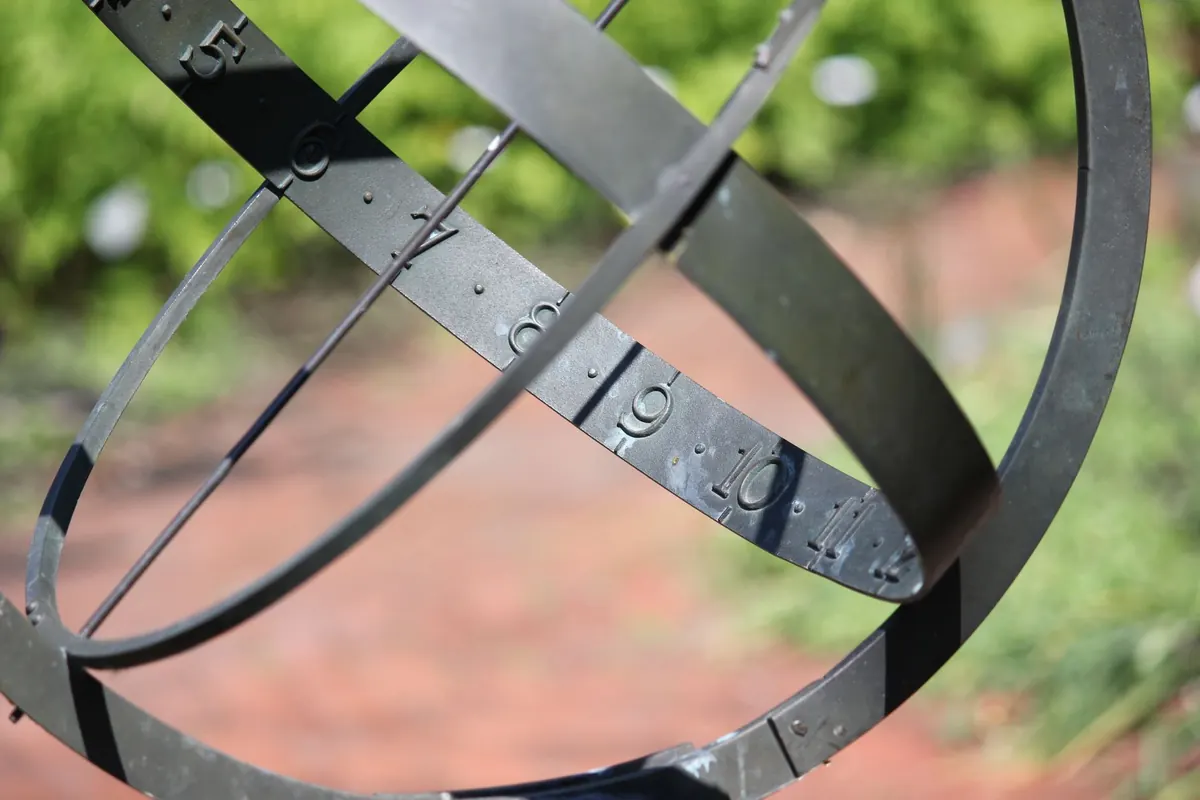

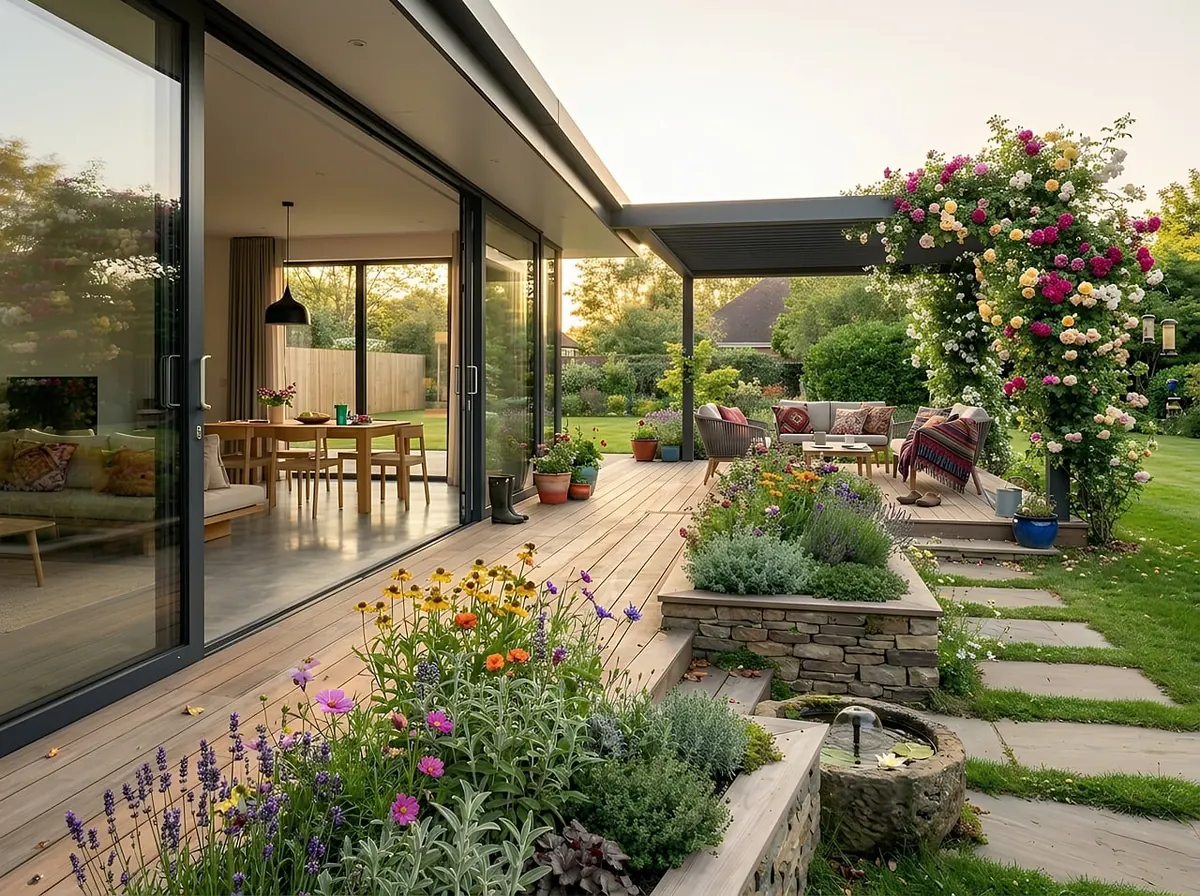
A sundial does its best work in the last hour of the day. The light comes in low and warm, the gnomon throws a shadow long enough to read from a chair, and numerals you walked past at noon suddenly mean something. If you already have a dial in the garden, a weathered stone pedestal or a brass plate on a plinth, the space around it can be arranged so the sunset becomes a small daily appointment instead of something you notice through a window. It takes an afternoon of measuring, a few decisions about seating, and a planting plan that keeps the view open.
Start With the Sun, Then Place the Dial
Before you move a single chair, spend two or three clear evenings watching where the sun actually goes down. Stand where the dial is and note the point on the horizon. Mark it with a bamboo cane, then repeat a few weeks later. In the northern hemisphere the sun sets well north of west in June and well south of west in December, so you are not designing for one point but for a wide band of sky that shifts through the year. In the southern hemisphere the same swing happens in reverse.
That band is the view, and nothing tall should block it. A common mistake is to plant a hedge to shelter the seating area without checking what it hides. A hedge 1.5 metres high, three metres to the west of the dial, will erase the sunset for most of the year.
The other thing to check is the dial itself. A horizontal sundial is calibrated for its latitude: the gnomon is set at the angle of the site, and the face must be level. If yours has sat in the same spot for decades, leave it alone. If you must shift it, keep it perfectly level, keep the gnomon pointing to the celestial pole (north in the northern hemisphere, south in the southern), and accept that a dial moved a long distance north or south will lose accuracy. A metre or two across the lawn changes nothing.
Shaping the Bed So the Dial Reads as the Centre
Give the dial a geometry of its own. A full circle of gravel or a quarter-circle apron in front of it gives the eye something to complete, and a circle reads well from every seat in the garden. A single path that arrives slightly off-centre is softer than a path aimed dead at the pedestal.
Keep the planting immediately around the base low, ideally under 30 centimetres, so the face is never hidden and the shadow can be seen running across the ground. Thyme, small sedums, or a plain ring of gravel all work and all tolerate the dry conditions around stone. If the dial stands in grass, edge a clean circle around it, because long grass in the evening light turns into a blur and the shadow is lost.
Check the pedestal height against how you plan to use it. A face at roughly chest height suits standing and reading; a lower pedestal works for a chair placed close. Set the seat within three or four metres and the numerals stay legible as the light fades.
Seating: Where to Sit and Which Way to Face
There are two good positions, and they do different jobs.
Facing the light
A bench east of the dial, looking west, gives you the sunset with the dial silhouetted in front of it. It is the more dramatic arrangement, and it is the one to choose if you want the corner to feel like a place for quiet rather than conversation. Position the bench so the pedestal sits a little to one side of centre, not directly in your line of sight, and keep a metre or so of clear ground in front of it so the dial's shadow has room.
Facing across the light
A seat north of the dial, angled south-west, puts the low sun across the face and lets you read the time at eight in the evening. This is the better position if you want the dial to be the point of the corner rather than a silhouette. Add a second chair at right angles so the space holds a conversation, and a small side table between them for a glass and a book.
Choose wood over metal for the bench. Metal is uncomfortably hot after a long afternoon and cold by dusk. Angle the back slightly, around 15 degrees, so you can look up at the sky without straining.
Planting for the Last Hour of Light
Evening planting works on three senses: pale colour that holds light when saturated colours go grey, scent that arrives after the bees have gone, and structure that gives a strong outline against a bright sky.
- Pale flowers: white cosmos, tobacco plant, sweet rocket, and white nicotiana all glow at dusk and need little attention.
- Scent: night-scented stock and jasmine near the bench, where you will actually sit.
- Silver foliage: lavender, santolina, and stachys placed where the low sun rakes across them.
- Grasses: a clump of stipa or miscanthus to one side, never in front of the dial, catching the last light and moving in the evening breeze.
Use taller planting behind the bench, not beside the dial. A low hedge or a few shrubs at your back blocks wind and hides neighbouring windows and streetlights, which matters far more than most people expect; a single bright security lamp across the road will flatten the whole effect. Leave the stems of perennials standing through winter, because a frosted silhouette against a January sunset is worth more than a tidy border.
Lighting That Serves the Dial, Not the Sky
The rule is simple: light the dial, not the view. A small shielded fixture at the base of the pedestal, aimed upward with a narrow beam, will graze the face and the stone without spilling into the garden. Keep the source below the dial face so the light does not glare into the eyes of anyone sitting nearby, and choose a warm colour temperature rather than a blue-white one.
Path lights should be dim and low, and nothing should stand between the bench and the western horizon. A soft glow behind the seating, from a low bollard or a candle lantern on the table, actually helps: it lets your eyes adapt so the sky looks brighter, not dimmer. Put everything on one switch or timer near the door so the corner is easy to light and easy to darken by ten o'clock. Point fixtures downward, hood them, and avoid anything that throws light upward into the sky.
A Weekend to Build the Corner
Work in this order and the decisions make themselves.
- Spend an evening marking the sunset's arc with two canes, one at midsummer's position and one at midwinter's.
- Check the dial is level and the gnomon undamaged; brush out moss and dirt with water and a soft brush, but do not polish a brass or bronze face, since the patina cuts glare and helps you read it.
- Set the bench, sit in it at dusk, and move it until the dial and the sky sit comfortably in the same view.
- Edge the bed, lay gravel or low planting around the base, and keep the western side open.
- Add one uplight at the pedestal and one dim light behind the seat, then test both at dusk before fixing them in place.
After that, the maintenance is small and seasonal: check the pedestal is still level each spring after frost, trim anything that has grown into the sightline, and sweep the gravel. A sundial in a well-made corner stops being an ornament and becomes a reason to step outside at the end of the day.
Photo: MrWashingt0n / Pixabay