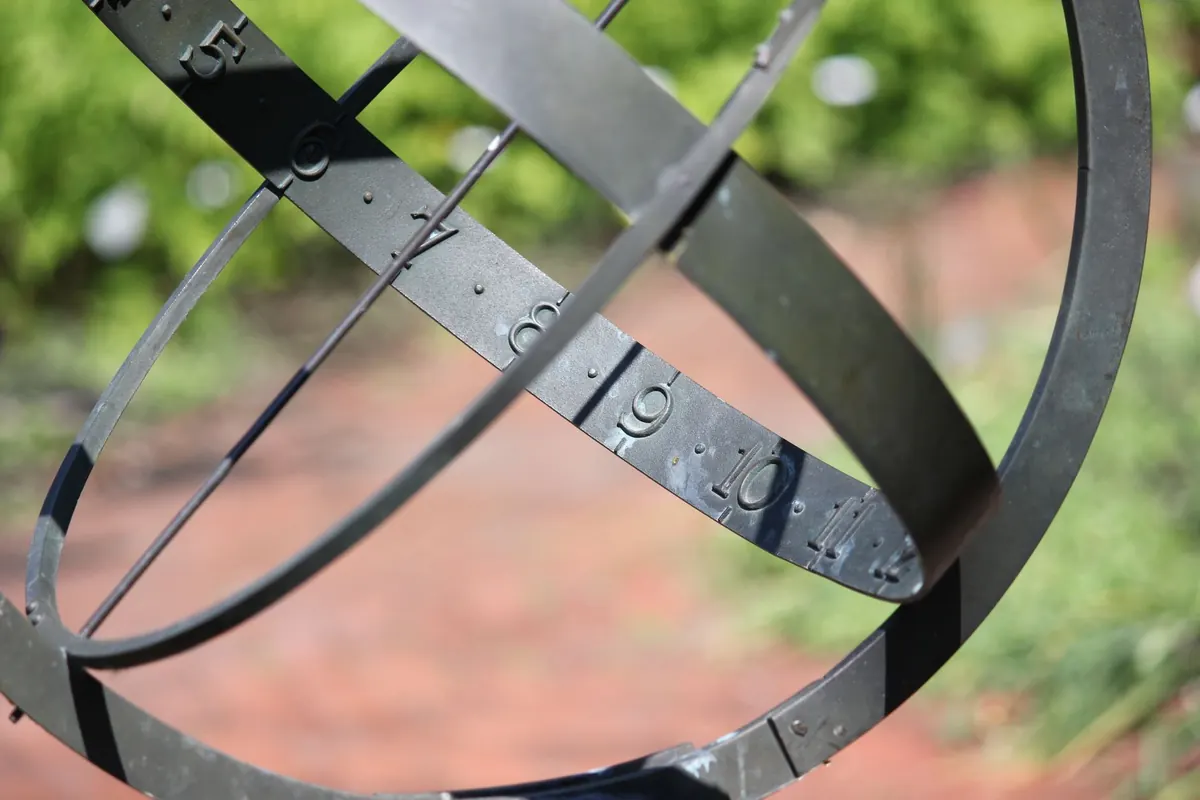

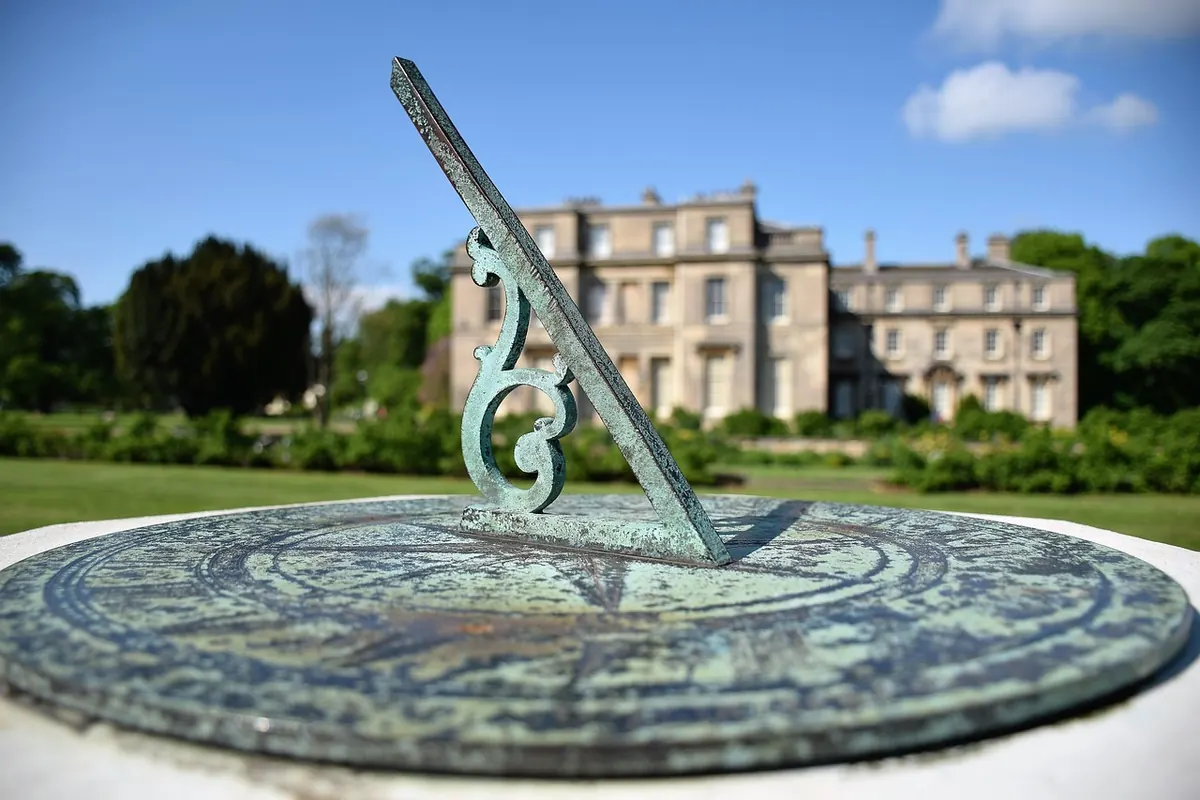
A sundial in a garden is part ornament, part instrument. It can keep surprisingly good time, but only when it has been installed with care. A dial that is slightly off level or pointed a few degrees away from true north will still look handsome, yet its shadow will drift ahead or behind through the day. The good news is that you do not need specialist equipment. You need a spirit level, a reliable way to find true north, a protractor or angle finder, and the patience to make a few small adjustments. This guide covers the essentials for a horizontal dial, the most common type for garden use.
Choose a Spot with Sun and Stability
A horizontal sundial needs direct sunlight for as much of the day as possible, and especially around midday. In the northern hemisphere, look for a position with an open southern sky. Avoid the south side of a wall, shed, or large tree if it throws shade across the dial during the hours you care about. Before fixing anything permanently, watch the intended spot at several times of day. A place that is sunny at breakfast may be in shadow by early afternoon.
The base matters as much as the view. A dial on soft, uneven ground will shift with rain, frost, and foot traffic. Choose a firm paving slab, a stone plinth, a pedestal, or a compacted gravel base. If the dial sits on a lawn, set it on a buried paver so the mower cannot knock it out of alignment. Keep a compass away from fence posts, tools, cars, and reinforced concrete when you are checking direction; metal nearby can distort the needle. In the southern hemisphere, reverse the advice: you want an open northern sky, and the dial will be set up differently.
Level the Dial Carefully
The dial face must be truly horizontal. “Nearly level” is not good enough. A tilt of only a degree or two can push the reading several minutes off, and the error may change through the day. Use a spirit level in two directions at right angles. On a round dial, check across several diameters, not just one. If the base is adjustable, make small corrections with shims or by bedding it more firmly in sand or mortar. Press down on the base and recheck; a dial that rocks slightly will not stay true.
Give the installation time to settle. After the first heavy rain or a hard frost, check the level again and correct any movement. This is especially important with wooden posts and pedestals set into soil. A stable base is the quiet foundation of an accurate dial.
Find True North, Not Just Magnetic North
A compass points to magnetic north, which is usually not the same as true north. The difference is called magnetic declination, and it varies by location and changes slowly over time. If you align a dial to a compass needle without correcting for declination, it may be off by several degrees. Use a reliable local map or survey reference to find the declination for your area, then rotate your compass reading accordingly.
The solar noon method
You can also align the dial directly with the sun, which avoids compass error altogether. In the northern hemisphere, the shadow of a vertical stick is shortest at local solar noon and points true north. South of the equator, the shortest shadow points true south.
- Set a straight stick vertically in level ground and mark the tip of its shadow every ten minutes or so around midday.
- Find the shortest shadow mark. That line gives you the meridian, the true north–south line.
- Place the dial so its noon line lies along that meridian, or rotate it until the shadow of the style falls exactly on the noon line at solar noon.
- Mark the base position clearly before making the installation permanent.
Remember that solar noon is rarely the same as 12:00 on your clock. It shifts with longitude, the equation of time, and daylight saving. Align the dial by the sun, not by a convenient glance at your watch.
Set the Gnomon to Your Latitude
On a horizontal sundial, the angle between the gnomon and the dial plate should equal your latitude. At 45 degrees north, for example, the style edge rises 45 degrees from the horizontal face. Many garden dials are made for a specific latitude or a narrow range. If yours is adjustable, loosen the fixing and use a protractor or angle finder to set the correct angle.
The important edge is the one that casts the time shadow, often called the style edge. It should lie in the meridian plane, pointing true north in the northern hemisphere and true south in the southern hemisphere. If the dial was made for a very different latitude, no amount of careful leveling will make it fully accurate. It can still be a pleasant ornament, but treat its readings as approximate. A dial made for 40 degrees will not read correctly across the seasons at 55 degrees.
Fine-Tune with Solar Time, Not Clock Time
Sundials show apparent solar time. Clock time is a different thing. The equation of time makes the sun run fast or slow by roughly a quarter of an hour through the year. Longitude within a time zone adds another correction of about four minutes per degree, and daylight saving shifts the clock by an hour. Do not rotate the dial simply because it disagrees with your phone at a random moment. First confirm solar noon, then check that the noon line and style shadow agree.
If your dial includes an equation-of-time table, use it to compare solar time with clock time. If not, a small correction card kept nearby is enough for most garden use. The point is to judge the dial by the right standard.
A Short Setup Checklist
- Open southern sky in the northern hemisphere, open northern sky in the southern hemisphere.
- Solid, stable base with no rocking or soft ground.
- Dial face level in two directions at right angles.
- Style edge set to your latitude.
- Noon line aligned with true north, or true south south of the equator.
- Compass used away from metal and reinforced concrete.
- Level and alignment rechecked after rain, frost, or settling.
Living with a Garden Sundial
A well-set sundial will not match a digital clock to the minute, and it should not be expected to. It reads the sun, the seasons, and the slow turning of the year. Check it after storms and at the start of a new season, keep the face clean, and resist the urge to polish away its markings. If the dial is consistently out by the same amount at noon, suspect alignment. If it drifts differently through the year, suspect the gnomon angle or the dial’s design latitude. Small corrections are part of owning a sundial, and they are half the pleasure.
Photo: brian207 / Pixabay